Wednesday, May 15, 2019

Dump Vestige T4T LAB 2019


T4T LAB 2019 Texas A&M University. Invited Professor: Joris Putteneers.
Team: Emily Majors, Cynthia Castro, Jeannelle Fernandez, Alejandra Valdovinos

Dump Vestige

As Timothy Morton asserts, “the fantasy we have regarding trash lies in that it disappears [and] dissolves.” In the United States alone, humans are generating trash at a rate of 4.6 pounds per day per person, which translates to 251 million tons per year. As a result, greenhouse gas production is increasing and studies indicate that the earth will become uninhabitable for human life by the year 2060. Hundreds of species rely on organic waste produced by human activity for survival.  This raises the question of how an ecosystem dependent on the production of human waste, such as the garbage dump can survive without humans available to generate input?

This machine uses big data collected from digital waste and physical waste in order to optimize dump emissions with the intent of sustaining both the earth and the ecology of the rubbish dump, privileging the dumps’ agenda to preserve itself in the case of human extinction through a process of machine learning and synthetic trash manufacturing.

Occupying the territory of the dump, the self-generating structure operates cyclically, fluctuating, expanding, and contracting over time as more garbage accumulates and system optimization occurs. The cycle begins with the insertion of an algorithmic primitive that collects, learns, and expands until it begins phases of consolidation and optimization. The cycle begins again as the machine updates and refines its understanding of the dump.

The machine determines the desired composition and form for optimized trash based on a gained understanding of the chemical composition of trash required for a positive impact on the ecosystem. The physical collection mechanism is interested in collecting samples of organic material and in rescuing lost data found in e-waste material such as computers, hard drives, mobile devices, etc. The machine combines on-site collection and observation techniques with its access to digital waste found in the cloud to better process garbage input.

Although the preservation of human life is not the machine’s intent, the machine’s ability to produce optimized waste that could fertilize soil, purify water, or counter the effects of carbon emissions could potentially postpone human extinction. Human extinction or not, the machine is primarily concerned with self-preservation through optimized synthetic trash manufacturing.

The machine is not pushing any aesthetic agenda. The machine derives its aesthetic regime from its own assimilation of how the machine becomes a part of its ecology, acquires big data, and produces as needed. It establishes a completely new aesthetic regime based on the algorithm big data allowed it to produce, but it is not assimilating any known aesthetic. The media exhibited in the presentation represents our speculation on the qualities of the machine’s aesthetic at all scales; large, in elevation and plan, smaller in interior and exterior machine detailing. The smallest scale of speculation can be observed in our photography and film studies.


Thursday, May 9, 2019

Counterfactual T4T LAB 2019


T4T LAB 2019 Texas A&M University. Invited Professor: Joris Putteneers.
Team: Hans Steffes, Fernando Rosas, Aaron Scheffield, Rebecca Romero

Counterfactual

Counterfactuals, or discourses concerned with the alternative outcomes of situations, have been foundational to architectural discourse over the past century. They have been of particular interest in the post-modern, neo-liberal context in which movements like modernism and speculative realism have emerged from. Counterfactuals allow the architect to speculate about what society would look like if the ideals behind the discourse were unilaterally accepted. Epistemological questions asked through the lens of counterfactuals allow us to wonder how our experience can justify thought and allow us to talk about remote possibilities without the limitations of our immediate episteme.

These speculations raise very serious questions about why we accept our immediate reality and what is to be done about it. Counterfactuals hold a particular allure to architects as they blend fact and fiction, justifying any speculation as long as it purports a realist or scientific basis. The critical issue facing speculative realism is the distinction between fiction and lies. Fictions are told with the understanding that they are not truth and are intended to convey some moral, lesson, or hope. Lies are the blatant misrepresentation of reality in order to achieve some end, or convince others of the projects validity. While science and fiction are not incompatible they are not replacements for each other, thus the very subtle difference between science fiction and fiction science. This is the danger of counterfactuals, their inherent ungroundedness makes them easier to accept as truth, especially when engulfed in a fire hose of untruth and propaganda. When immersed in such fictions, all this project can be is counterfactual.

In 1944 at the Democratic national convention, incumbent vice president Henry Wallace overwhelmingly won the nomination for Vice President to Franklin D. Roosevelt for his fourth consecutive term, making him the 33rd president of the United States. Following the end of second world war following the Soviet invasion of Manchuria and Japan, Wallace and Stalin signed a treaty promising that in exchange for Soviet ownership of Alaska, both sides would denuclearize and instead spend research funds on public interests such as humanitarian crises and materials and architecture research. The groundbreaking development of self replicating and repairing material allowed for the construction of large infrastructural and public works projects such as high speed trans-continental railroads, public housing, and immigration centers. The potential prosperity flaunted by the proponents of these innovations never came.

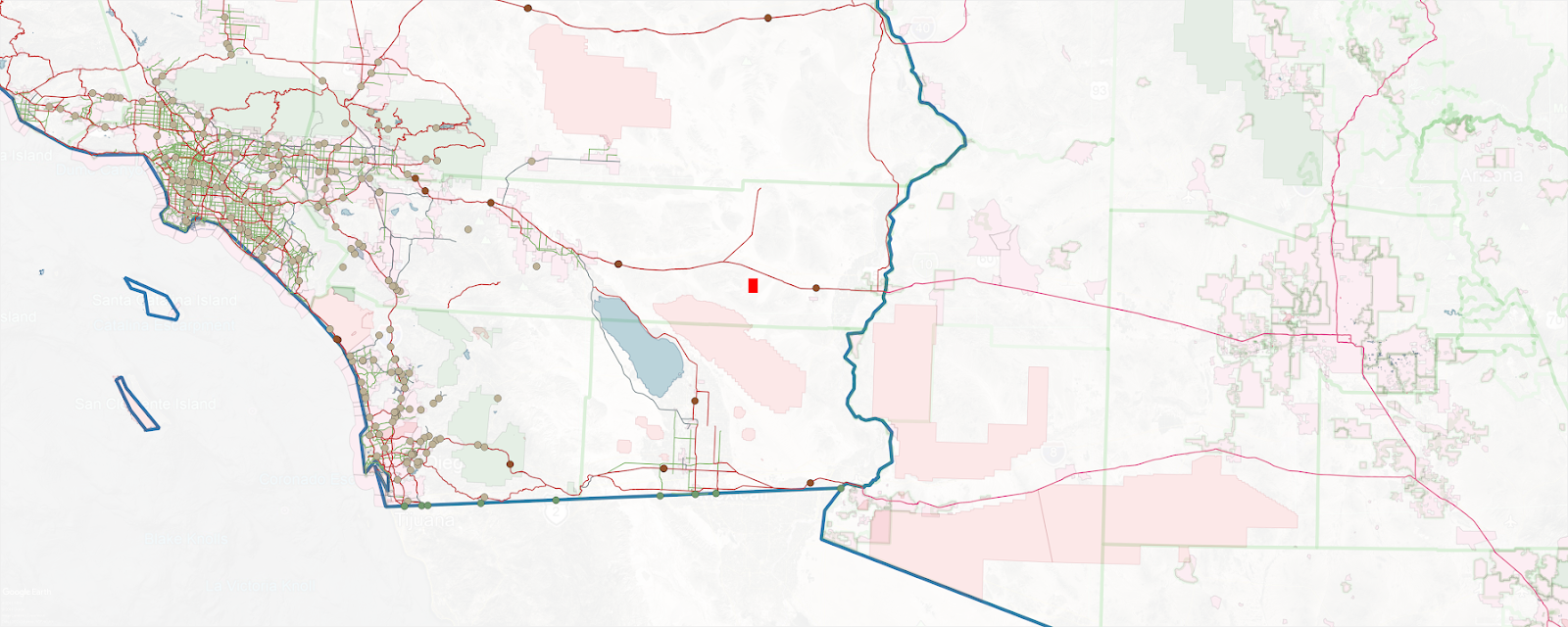
The miracle technologies were quickly co-opted by corporate powers and used to produce larger and more monotony. The wealth and prosperity promised by the efficiency of these new technologies was swallowed up by those with the capitol to utilize them and the wealth gap spiraled to record levels giving rise to a populist movement. The Henry A. Wallace Immigration Center was one of the first and only unique architectural expressions to come out of the “Architectural Revolution.” It was constructed in 1965 and served for 54 years before the rising populist movement condemned the flow of migrants into the United States from the northern border and the center was deemed a threat to national security.

When they set up the fire hose of falsehood they are asserting that they are not constrained by reality
There is nothing so humiliating and degrading as trying to prove the truth
The goal is to rob facts and reality of their power
It's the stories we tell about facts (or counter facts) that influence people
“Truth isn’t truth”
Facts and objective reality don’t matter to people, interpretation does
Don’t tell open ended stories, they can be distorted to mean whatever someone wants
Speculative realism is in a particularly vulnerable position in that its disregard for reality
leaves it open to being co-opted by those who might use it for unsavory purposes.
The critical issue is between lies and fictions, fictions have morals and are not intended
as replacements for reality, lies are intended to be believed as reality.
Lying that things are based in science and presenting them as engineered,
scientific solutions is dangerous to the profession and the discourse.

Wednesday, May 8, 2019

Submerged Topology T4T LAB 2019


T4T LAB 2019 Texas A&M University. Invited Professor: Joris Putteneers.
Team: Ozzy Veliz, Hannah Terry, Evelyn Ringhofer, Hunter Sliva, Jasper Gregory

Submerged Topology

In Quentin Meillasoux essay “After finitude: An Essay on the Necessity of Contingency” he introduces the notion of ancestrality upon objects and its alienation to human comprehension. In his essay he examines the concept of this ancestrality of existing in a non-anthropocentric world. Submerged topology exists within the “what-if” a pure narrative speculating of how objects may exist, have existed and their relation to its counterpart: artificial intelligence long distanced from its human trace.

The object in this project exists in a post-anthropocentric world where human have ceased to exist, and the next generation has led to development and evolution of AI. In its quest for knowledge and exploration the AI has traveled to remote areas where no information and data has been extracted, thus an AI in its quest for self learning. Upon reaching the bottom of the ocean, an area no man had ever explored the AI is able to acquire new visual data and add content to its library. This place is where the object exists and has existed, no prior information of an object of this scale leads the AI to assume that humans inability to find it has made it thrive and grow without human corruption throughout millennia, as far as the AI knows its point of origin in time is inaccessible but assumed to be millennia old. As Meillasoux would have place it, the object becomes a supra-ancestral object and thus have to be analyzed in universal terms not correlating to man-made ontology. In this case its textural qualities are represented through the machines first encounter with the object.

In a way to understand how the supra-ancestral object came to be, in its form, and its growth, the AI analyzes the figure in relation to its surroundings in this case the benthic layer of the ocean. In this environment, forms such as hydrothermal vents and the object itself are affected by the abundance minerals and smoke seeping from the fissures of the oceanic crust.

Therefore the AI interprets the object as itself through an analysis of possible growth algorithms due to the influencing factor of its harsh environment. Encoding the object itself is a series of representation separated from what the normal eye can see, in this type of representation “Machine Vision” the AI can take note and account for pressure , mineral deposits and laminate the image of the object in both infra-red, solid continuity, sectional analysis, and color spectrum. This is a very typical rendering and viewing technique of how we see depth passes and machines are able to laminate a single image and overlay passes of different qualities upon it. In the case of the elevation, the light is able to uncover the many different passes the AI sees upon examining the object and thus reveal the section and its air pockets. As the AI reflects upon the objects origin characteristics such as the objects layers and its thickness are observed to be direct responses to the environment. Through these visual observations of the environment and the newly discovered object there comes a better understanding of the objects ontology and therefore opens up new possibilities of data & discovery.

Much like the image layering of the elevation/section, the sound heard in the short film is an analysis of the machines collection of data through multiple spectrums. Audio cracking and disparate snaps represent the AI viewer interpreting or analyzing pieces of the object, much like lidar sensors in autonomous cars view its surroundings through laser location, and 3d scans objects on real time. In this case different layers of lamination and complexity are manifested in varied layers of audition. Reads with sound (slow pulses of LF noise) and results a crackling sound after analysis. The spotlights in the video and drawings allow us, the human viewers, to see - but it's really only a sliver of the what the machine views. AI would see in wavelengths of light invisible to human perception and in other methods outside of the human intelligence. This audio/visual data accumulation by the exploring AI is its attempt to gain an understanding of an object that is similar.